The "Pipeline Guardian" for Secondary Water Supply: Online Free Chlorine Automatic Sensors – Continuous Monitoring to Safeguard the Last Mile of Safety!
With years of deep engagement in the water quality monitoring industry, MedSci has collaborated with countless secondary water supply operation and maintenance (O&M) teams, and we fully understand that free chlorine control is the core key to secondary water supply safety and a major headache for O&M personnel. As the last mile of residents’ drinking water safety, secondary water supply involves tap water traveling from water plants through long pipelines to secondary water supply tanks, and finally into residents’ homes. The attenuation and changes of free chlorine affect water quality safety at all times. Today, as a professional laboratory free chlorine meter manufacturer, MedSci will analyze the pain points of free chlorine control from the perspective of secondary water supply O&M, explain the core advantages of online free chlorine sensors in detail, and teach you how to use technology to safeguard the drinking water safety of this last mile.

I. The Headache of O&M Personnel: Uncontrollable Free Chlorine Imbalance and Easy "Disconnection" of Traditional Monitoring
For secondary water supply O&M personnel, the most challenging task is controlling free chlorine concentration — not a fraction more, not a fraction less. Free chlorine is like a preservative for tap water: insufficient concentration deprives tap water of its protective shield, making the water prone to bacterial and microbial growth and causing water pollution, leaving the water residents drink with potential safety hazards. On the other hand, excessive free chlorine not only gives tap water a pungent odor and impairs drinking taste but may also produce harmful by-products, which also fail to meet safety standards.
What is even more frustrating is that the traditional sampling and testing model is completely unable to cope with the dynamic changes of free chlorine. This type of testing is like checking the preservative content occasionally: O&M personnel can only conduct on-site sampling 1-2 times a day, which is both time-consuming and labor-intensive, and cannot cover the entire process of pipeline transportation and tank storage. Free chlorine continuously attenuates with time and pipeline distance, and it is highly likely that the water meets standards during sampling but is either over-standard or insufficient when residents use it. Once discovered by regulatory random inspections, O&M personnel will not only face penalties but also bear relevant responsibilities for residents’ drinking water safety, putting O&M work in a passive position.
II. Core Protection: Online Free Chlorine Sensors – Acting as the "Pipeline Guardian" for Secondary Water Supply

To solve the problem of free chlorine control and safeguard the safety of the last mile of secondary water supply, MedSci believes that the most efficient and worry-free solution is to use online free chlorine water quality sensors. Its 24/7 continuous monitoring function is like a dutiful pipeline guardian that keeps a close eye on the concentration of free chlorine — the "preservative" — making real-time adjustments and precise control. Its core value is fully aligned with the actual needs of secondary water supply O&M.
1. Precise Chlorine Control, Upholding the Safety Bottom Line
Like a pipeline guardian, it captures the real-time attenuation changes of free chlorine in secondary water supply tanks and water transmission pipelines, and accurately feeds back the free chlorine concentration at every moment. Once the concentration is lower or higher than the national specified standard, it immediately issues an audible and visual alarm. After receiving the reminder, O&M personnel can timely adjust the disinfection dosage to quickly resolve the free chlorine imbalance problem — avoiding water pollution caused by insufficient free chlorine and eliminating the impact of excessive free chlorine on taste and safety.
2. Cost Reduction and Efficiency Improvement, Reducing Labor Input
Traditional free chlorine monitoring requires O&M personnel to rush between various water supply stations every day for sampling, testing and dosage adjustment, which is time-consuming, labor-intensive and inefficient. The online free chlorine sensor realizes full-process automated monitoring without manual on-duty operation, which not only greatly reduces labor costs but also avoids free chlorine imbalance caused by human operation errors. It makes secondary water supply O&M more worry-free and efficient, and O&M personnel are no longer burdened with tedious testing work.
3. Compliance and Risk Avoidance, Building a Solid Foundation for O&M
Regulatory authorities have clear requirements for free chlorine monitoring of secondary water supply, which not only requires real-time compliance of free chlorine concentration but also the retention of complete monitoring data for inspection. The online free chlorine sensor can automatically record 24-hour free chlorine change data to form a complete O&M ledger, which can be exported at any time and submitted to regulatory inspections at any time. It easily meets compliance requirements and effectively avoids the risks of penalties and liabilities due to substandard free chlorine.
III. High-Tech Support: Simple, Durable and Adaptable to the Complex Scenarios of Secondary Water Supply
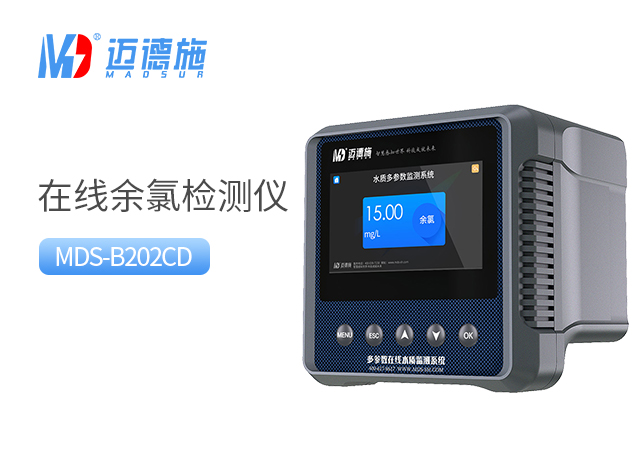
Many O&M personnel may worry that high-tech equipment is complex to operate and not durable? In fact, there is no need for such concerns. All designs of MedSci’s online free chlorine water quality sensor are tailored to the complex O&M scenarios of secondary water supply — no obscure professional terms, durable and easy to operate. Its three core technologies behind the scenes further reduce the burden of O&M work.
1. Real-Time Response Technology
The online free chlorine automatic sensor is built with high-sensitivity detection components, like a dedicated detector for free chlorine. It can quickly capture subtle changes in free chlorine concentration with fast detection speed and timely feedback, completely solving the pain point of "fast and elusive free chlorine changes" in secondary water supply and eliminating monitoring lag.
2. Stable Battery Life + Wireless Transmission Technology
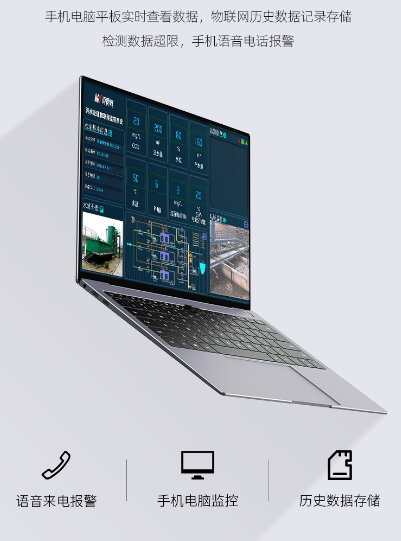
Adopting a low-power and stable design, it can work 24/7 uninterruptedly. Equipped with wireless transmission function, monitoring data is synced to mobile phones and computer terminals in seconds, like a portable monitoring assistant. Even when O&M personnel are not on-site, they can grasp the dynamic changes of free chlorine at any time and handle abnormalities promptly.
3. Anti-Attenuation + Easy Calibration Technology
The sensor is made of special anti-attenuation materials, so long-term immersion in water will not affect detection accuracy. It also has a built-in automatic calibration function, like having a calibrator of its own, eliminating the need for frequent manual debugging. It not only reduces manual operations but also ensures the long-term accuracy of monitoring data, making it adaptable to the complex water quality environment of secondary water supply.
IV. O&M Resonance: Safeguarding the Last Mile is Safeguarding Residents’ Trust
Secondary water supply may seem like a simple process of "water storage and transmission", but it actually carries the drinking water safety expectations of millions of families. Every tiny change in free chlorine is related to residents’ health. As secondary water supply O&M personnel, safeguarding this last mile is safeguarding residents’ trust, and it is also our responsibility and mission.
With no complex operation procedures and tedious daily maintenance, the online water quality monitor relies on hardcore high technology to stand guard 24/7, precisely control free chlorine concentration, help O&M personnel solve control problems, reduce O&M costs and avoid compliance risks. Choosing it means choosing worry-free and peace of mind, making secondary water supply O&M more efficient and standardized, firmly safeguarding the safety of every drop of water for residents, and building a solid drinking water safety defense line for the last mile.
Feel free to leave a message to MedSci, your reliable free chlorine water quality sensor manufacturer, to obtain an exclusive free chlorine monitoring solution for secondary water supply!
Previous: Severe Hazards of Delayed Data! Install an Online Free Chlorine Automatic Monitor to Avoid Swimmer Complaints & Business Suspension Crises!
Next: Delayed Data Fuels Bacterial Growth in Bottled Water? How Do Online Free Chlorine Automatic Detectors Safeguard Drinking Water Quality?

 TEL
TEL