Synthetic Biology Laboratory Resumes Work after Long Holiday: Is the Online Residual Chlorine Sensor Reading "Too Low"? Synchronous Ammonia Nitrogen Measurement + Formula Correction to Find the True Value
In a synthetic biology laboratory, the quality of water is of crucial importance, especially the residual chlorine concentration, which is typically required to be strictly controlled between 0.2 - 0.5mg/L. However, when the laboratory shuts down during a 7 - day long holiday, some minor issues arise. Due to poor ventilation and other reasons, trace amounts of ammonia in the air accumulate and dissolve in the water. This ammonia is quite reactive and will react with residual chlorine to form chloramines. This reaction has a significant impact, directly causing the detection value of the online residual chlorine automatic water quality sensor to be lower. For example, if the actual residual chlorine content is 0.4mg/L, the sensor may only show 0.15mg/L.

If the staff mistakenly believe this low - reading data, it will lead to big troubles. They will stop the chlorine - supplementing operation, resulting in incomplete water disinfection. The experimental strains in the laboratory, such as E. coli and yeast, are very likely to be contaminated. Once the strains are contaminated, the entire batch of experiments may fail. Not only will the loss of a single batch exceed 50,000 yuan, but it will also take 3 - 5 days to re - sterilize and prepare, seriously affecting the experimental progress.
The Key to Solving the Problem: Synchronous Ammonia Nitrogen Measurement and Formula Correction Plan
Facing such a dilemma, the core plan of "synchronous ammonia nitrogen measurement + formula correction" becomes a savior. Let's take a look at the differences between single detection and combined correction. Single detection only measures residual chlorine and cannot eliminate the interference of ammonia at all, just like looking for a way in the fog and easily going astray. The scientific combined correction plan consists of two steps.
The first step is to use the supporting ammonia nitrogen detection module to synchronously measure the ammonia nitrogen concentration in the water. For instance, the measured ammonia nitrogen concentration is 0.5mg/L.
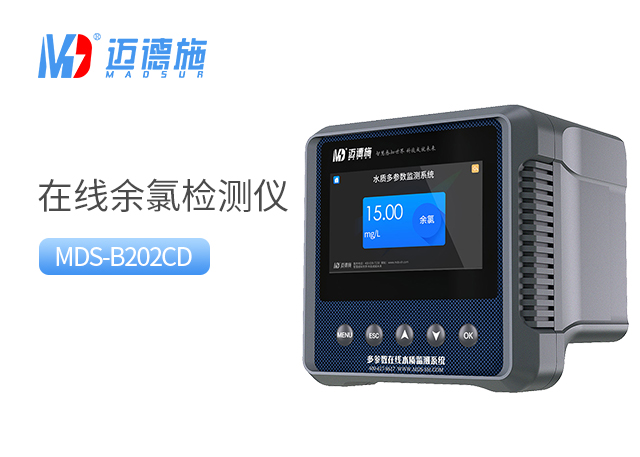
The second step involves two ways to correct the residual chlorine value. One way is to apply the correction formula "true residual chlorine value = measured residual chlorine value + ammonia nitrogen concentration × 0.5". Taking the previous data as an example, 0.15 + 0.5×0.5 = 0.4mg/L, and the true residual chlorine value can be calculated.
Another more convenient method is to directly activate the "automatic ammonia interference correction" function of the sensor. The instrument will perform real - time calculations and output the true data, thus avoiding errors caused by manual calculations.
Operation Essentials: Standard Process for Calibration after Long - Holiday Resumption
This "calibration after long - holiday resumption" has a standard process, just like a detailed operation manual.
First, take a water sample from the laboratory and measure the initial values using the online residual chlorine detector sensor and the ammonia nitrogen module respectively. Then, if the residual chlorine value is found to be more than 20% lower than the historical average, start the ammonia nitrogen detection and record the ammonia nitrogen concentration. Next, there are two operation methods. One is to manually input the ammonia nitrogen value into the residual chlorine sensor and enable the "correction mode"; the other is to directly use the "combined residual chlorine - ammonia nitrogen detection" mode.
After that, use a standard residual chlorine solution (0.4mg/L) to verify the correction result. If the error is less than ±0.02mg/L, it means the calibration is completed. Finally, after resuming work, conduct synchronous monitoring every 4 hours to ensure that ammonia interference is continuously eliminated.
Effect Verification: The Plan Achieves Remarkable Results and Recovers Losses
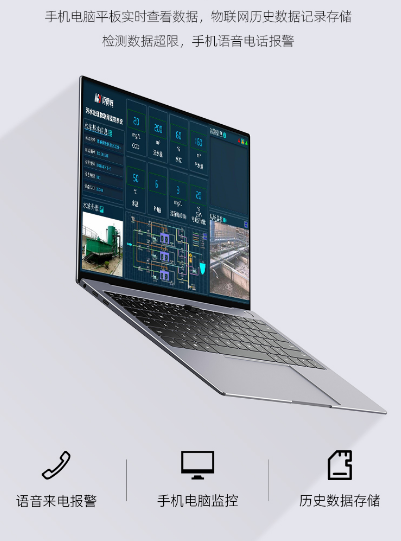
A synthetic biology laboratory implemented this plan with excellent results. It only took 15 minutes to complete the residual chlorine correction. The true residual chlorine value was corrected from the displayed 0.12mg/L to 0.37mg/L. The laboratory promptly supplemented chlorine to the standard concentration, avoiding strain contamination. The success rate of the experimental batch increased from the originally expected 70% to 98%. Moreover, there was no need for re - sterilization, saving 3 days of preparation time, enabling the laboratory to complete the experiments commissioned by customers on time and recovering a loss of 60,000 yuan.
This "synchronous ammonia nitrogen measurement + formula correction" plan solves the problem of low readings of online residual chlorine sensors when synthetic biology laboratories resume work after a long holiday, ensuring the smooth progress of experiments. If you are also troubled by similar problems, welcome to consult Maideshi, a leading chlorine sensor Manufacturer, for our Digital residual chlorine sensor and online residual chlorine detector.
Previous: Are People Flocking to Swim in the Cool Autumn? The Online Residual Chlorine Water Quality Detector Works with Chlorination, No Need to Worry about Inadequate Disinfection!
Next: Is the Data of Water for Cell Therapy Always Drifting? Choose the "Organic-Resistant Model" of Online Residual Chlorine Sensor with a Deviation of No More Than 0.001mg/L in 30 Days

 TEL
TEL