Upholding the Aseptic Safety Bottom Line: In-Depth Analysis of Customized Online Free Chlorine Automatic Monitor Solutions for the Medical Industry!
Medical device disinfection is the first line of defense in hospital-acquired infection (HAI) prevention and control. Free chlorine concentration must be strictly controlled within 5~10mg/L, and disinfection water temperature often reaches as high as 80℃. Even a slight deviation may lead to incomplete sterilization of devices and trigger HAI risks. However, characteristics such as alkaline additives in disinfection water, stringent aseptic requirements, and strict data traceability often cause general-purpose online free chlorine monitors to be inaccurate. A customized solution is like a tailor-made aseptic protection barrier for hospitals, which balances high-temperature precise detection, anti-corrosion and aseptic protection, and compliant traceability, comprehensively fortifying the safety bottom line of medical disinfection. Below, as a professionalfree chlorine water quality meter manufacturer, MedSci explains this in detail for you!
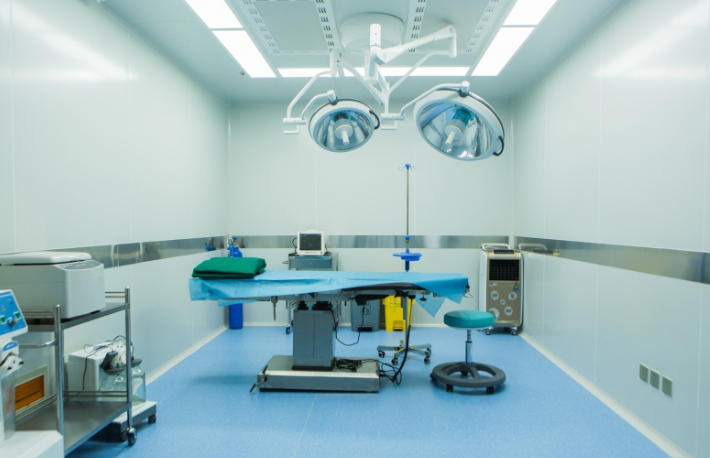
Industry Pain Point: General-Purpose Equipment Struggles to Meet the "High-Standard Threshold" of Medical Disinfection
Many Central Sterile Supply Departments (CSSDs) in hospitals have suffered setbacks with general-purpose equipment. The person in charge of the Infection Control Department of a Grade III Class A hospital revealed: "The general-purpose monitor we used before had severe temperature drift in 80℃ high-temperature disinfection water, with a free chlorine detection deviation of more than 0.5mg/L. Once, a batch of surgical instruments was recalled due to substandard disinfection, which not only delayed the surgical schedule but also nearly caused an HAI incident. What’s more troublesome is that the disinfection water contains alkaline additives, which corroded the general-purpose probe in just one month, leading to frequent drift in detection data. In addition, the equipment’s sealing performance was insufficient, making it easy to breed bacteria and cause secondary pollution, which completely failed to meet aseptic requirements."
The challenges of compliant traceability and process linkage add more hidden dangers: the Infection Control Department requires storing disinfection data for each batch for more than 3 years, and it must be linked to device type and disinfection time. General-purpose equipment lacks batch association functions, so records can only be kept manually in ledgers, which are prone to errors and difficult to trace, making it impossible to respond to sudden inspections. General-purpose equipment has no linkage function; the disinfection process continues even when free chlorine concentration is substandard, which may lead to non-compliant devices entering clinical use, putting hospitals in an HAI prevention dilemma of "inaccurate detection, easy corrosion, potential pollution, and difficult traceability".
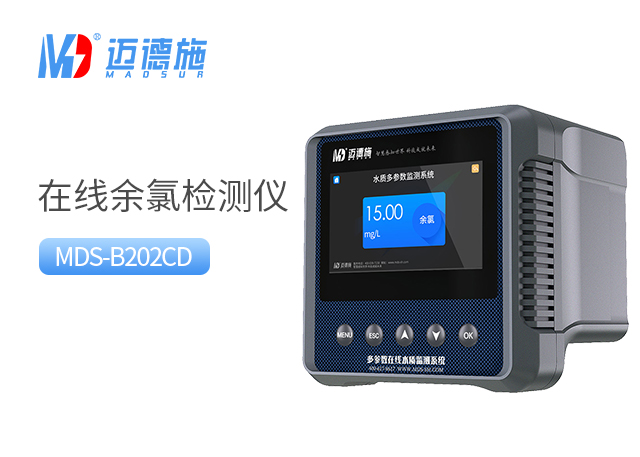
Core Customized Functions: Four Solutions to Fortify the Aseptic Defense Line
1. High-Temperature Precise Detection – Equipped with a "High-Temperature Precision Calibrator"
For the high-temperature working conditions of medical disinfection, the equipment expands the temperature compensation range to 0℃~95℃ and adopts high-temperature stable electrode materials, which can operate stably in 80℃ high-temperature disinfection water, with free chlorine detection accuracy controlled within ±0.1mg/L. It’s like installing a "high-temperature precision calibrator" for the equipment, completely solving the problem of high-temperature drift, ensuring that the free chlorine concentration meets standards accurately throughout the disinfection process, and eliminating incomplete sterilization caused by concentration deviations.
2. Anti-Corrosion and Aseptic Customization – Wearing a "Medical Anti-Corrosion Aseptic Armor"
The online free chlorine automatic sensor is made of corrosion-resistant Hastelloy alloy, which can resist long-term erosion by alkaline disinfection water and extend service life. At the same time, it adopts a fully sealed structural design, supporting 134℃ high-temperature and high-pressure sterilization, with no bacterial residues after disinfection, fully complying with hospital aseptic standards. Just like putting a "medical anti-corrosion aseptic armor" on the probe, it is both anti-corrosion and anti-pollution, adapting to the stringent aseptic environment of the CSSD.
3. Batch Association Customization – Equipped with a "Medical Disinfection Archivist"
It supports the associated storage of multi-dimensional data such as disinfection batch, device type, and disinfection time, automatically generates standardized disinfection reports, and can securely store data for more than 3 years, which can be exported with one click for inspection by the Infection Control Department. It’s like having an exclusive "medical disinfection archivist", eliminating the need for manual ledger sorting, realizing traceable and tamper-proof data throughout the disinfection process, and easily meeting the compliance requirements of infection control.
4. HAI Linkage Customization – Built-in with an "HAI Safety Valve"
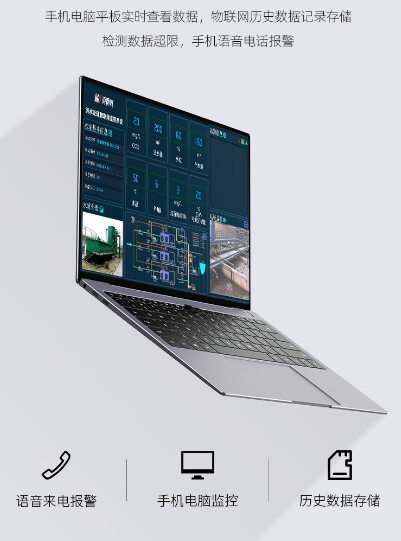
It reserves a medical-specific linkage interface, which can be seamlessly linked with disinfection equipment, acting as an "HAI Safety Valve". When the free chlorine concentration is lower than 5mg/L or higher than 10mg/L, the equipment immediately and automatically pauses the disinfection process, and at the same time pushes an alarm message to the central control system of the Infection Control Department, reminding staff to investigate and adjust in a timely manner, avoiding the flow of non-compliant devices from the source and upholding the bottom line of HAI prevention and control.
Customization Value: Uphold the HAI Bottom Line and Ensure Medical Safety
The four customized functions precisely adapt to the core needs of hospitals for high temperature, strong corrosion resistance, asepsis, and traceability in disinfection. They not only solve the adaptation shortcomings of general-purpose equipment but also improve the accuracy of free chlorine detection and the safety of the disinfection process. Through process linkage and data traceability, they effectively mitigate HAI risks, meet the compliance inspection requirements of the Infection Control Department, provide full-process protection for medical device disinfection, and help hospitals improve the level of medical safety.
Practical Application: Unlock the Intelligent HAI Prevention and Control Mode for Medical Disinfection

Deploy this customized monitor in the disinfection tank of the hospital’s CSSD to monitor free chlorine concentration in real time 24/7, automatically compensate for the impact of 80℃ high temperature, and ensure accurate detection data. The equipment synchronously associates the batch and type of device disinfection, stores monitoring data in real time and generates reports. If the free chlorine concentration deviates from the standard range of 5~10mg/L, it immediately and automatically pauses the disinfection process and pushes an alarm message to the Infection Control Department. The whole process realizes "precise monitoring + automatic linkage + compliant traceability", ensuring that each batch of devices meets aseptic standards and escorting clinical medical safety.
If you are not satisfied with the current water quality monitoring effect, feel free to leave a message to MedSci, your reliable free chlorine water quality sensor manufacturer, to obtain an improvement plan!
Previous: From Preventing Rinse Residues to Compliant Records: 4 Customized Functions of Online Free Chlorine Automatic Sensors for Disinfection Scenarios!
Next: Dual Protection for Pool Operations: When to Adopt the Combined Setup of Online + Laboratory Free Chlorine Automatic Water Quality Monitors?

 TEL
TEL