Portable Automatic Residual Chlorine Water Quality Monitor: Accurate Anytime, Anywhere to Safeguard Domestic Drinking Water Quality
Drinking water plants serve as the "source factories" of urban drinking water safety, while secondary water supply covers the "last mile" for high-rise residents. Together, they form the core hub ensuring safe drinking water for thousands of households. From raw water intake, treatment processing and pipeline transportation to pressurized delivery via secondary water supply tanks into homes, every step demands extreme caution. Residual chlorine testing acts as the final checkpoint throughout the entire process, much like a dedicated gatekeeper protecting drinking water safety.
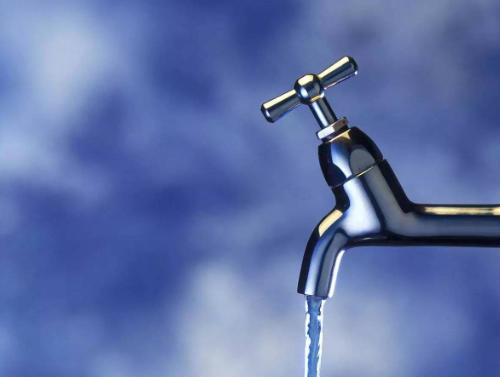
Residual chlorine is a critical indicator after drinking water disinfection. Proper residual chlorine levels effectively inhibit the growth of bacteria and viruses and prevent secondary pollution. If levels fail to meet standards—too high irritates the human respiratory tract and skin, while too low provides no disinfection effect—substandard water may enter households, quietly endangering the health of the elderly, children, and the whole family. This is also the top livelihood concern for drinking water plant and secondary water supply managers. As a professional **laboratory residual chlorine water quality detector manufacturer , we provide a detailed explanation and practical solutions below. Prominent Pain Points in Water Supply Management: Traditional Testing Fails to Protect Livelihood Bottom LinesFrom the perspective of drinking water plants and secondary water supply managers, the comprehensiveness and timeliness of residual chlorine monitoring directly affect public drinking water safety and corporate reputation. However, many limitations of traditional residual chlorine testing often put management in a passive position.
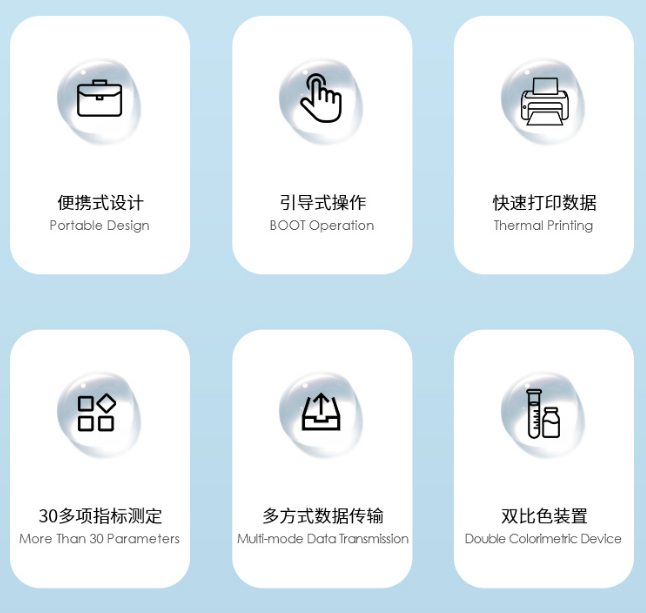
1. Extensive Monitoring PointsMonitoring covers raw water intakes, plant workshops, urban pipe network ends, and residential secondary water supply tanks. These points are widely scattered, with some located outdoors. Traditional testing equipment is bulky and fixed to laboratories, making multi-point and on-site inspections impossible. This easily creates testing blind spots and prevents full-process grasp of residual chlorine conditions. 2. Cumbersome Traditional Testing ProceduresTesting requires professional sampling, sample delivery, and complex laboratory operations to produce results, leading to long cycles. In emergencies such as raw water pollution or abnormal disinfection processes, excessive or insufficient residual chlorine cannot be detected in time. This may result in substandard water being supplied to households, triggering resident complaints and damaging corporate credibility. 3. High Training Costs for Professional TestersTraditional devices are difficult to operate and require professional certification, increasing labor costs while reducing overall testing efficiency. They struggle to meet the needs of regular, full-coverage residual chlorine management. Portable Residual Chlorine Detector: A "Mobile Water Quality Testing Station" for Water Supply ManagementTo address these pain points in the water supply industry, the Medshy Portable Residual Chlorine Water Quality Tester completely breaks the scene limitations of traditional testing. It functions as a mobile water quality testing station, perfectly matching full-scenario monitoring requirements for drinking water plants and secondary water supply with strict and accurate technical performance. Compact and lightweight for one-hand carrying, the device features a waterproof and durable design that easily adapts to complex environments such as outdoor inspections and secondary water supply tank areas. It resists moisture and dust, requires no fixed installation, and can start testing anytime, anywhere. Compared with traditional laboratory equipment, it needs no complicated pretreatment or professional laboratory environment. Staff can master operation after simple training, reducing reliance on professional technicians and greatly cutting labor input costs. High Precision & Efficiency: Guarding Domestic Drinking Water Quality with Reliable Data
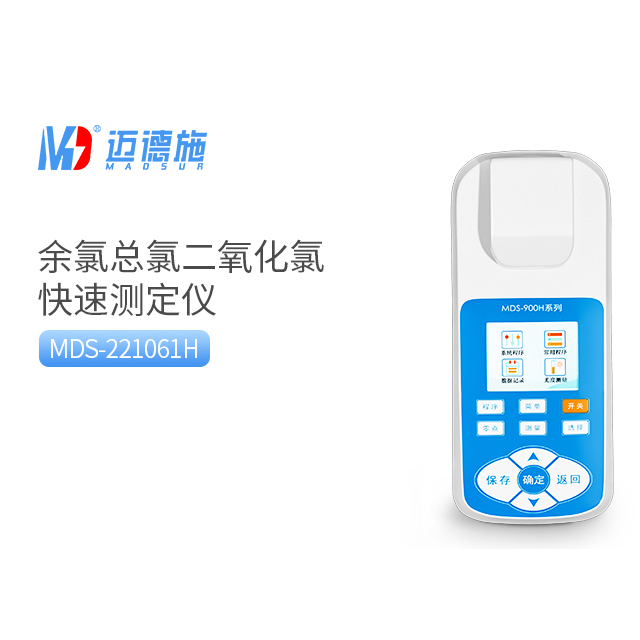
The core value of the Medshy Portable Residual Chlorine Water Quality Monitor lies in its accuracy, speed, and convenience, truly solving practical challenges for water supply managers. - It features high detection accuracy, capturing subtle changes in residual chlorine levels with errors compliant with national drinking water standards, providing reliable data support for water quality management. - It delivers fast testing: with just a small water sample, results are generated within minutes, allowing real-time monitoring at all points. In drinking water plants, staff can carry the device to raw water areas, aeration tanks, and disinfection workshops to monitor process water in real time and adjust disinfectant dosage promptly to ensure finished water meets standards. For secondary water supply, inspectors regularly test residential tank water quality to eliminate secondary pollution risks and prevent substandard water from entering homes. The device simplifies the entire testing process and improves residual chlorine control efficiency, enabling water supply managers to achieve full-process, all-round monitoring at lower costs, effectively safeguarding the bottom line of public drinking water safety and fulfilling the social responsibility of water supply enterprises. Portable Empowerment: Safeguarding Safe Drinking Water for Every Household
No detail is too small when it comes to drinking water safety. Every drop of qualified drinking water carries public trust and the responsibility of water supply enterprises. The Medshy Portable Automatic Residual Chlorine Water Quality Monitor breaks the scene restrictions and technical barriers of traditional residual chlorine testing, shifting monitoring from fixed laboratory analysis to accurate on-site testing anytime, anywhere, thoroughly resolving pain points in water supply management. With its compact size, reliable data, and user-friendly operation, it provides an efficient management tool for drinking water plants and secondary water supply managers. It reduces management costs, improves control efficiency, and firmly maintains the quality standard of domestic drinking water, acting as an indefatigable guardian of drinking water safety throughout the water supply chain. As a leading **residual chlorine water quality sensor manufacturer** and trusted China residual chlorine detector supplier , we provide high-performance **residual chlorine automatic water quality sensors** and portable monitoring solutions. Feel free to contact Medshy, a professional **residual chlorine monitor manufacturer**, to build a stronger defense for drinking water safety with technology. Let citizens enjoy safe and secure water straight from the tap, with portability defining the core of public drinking water protection.
Previous: Labor-Saving Guide for Food Processing Plants: Online Automatic Residual Chlorine Water Quality Analyzer – Your "Hygiene Sentinel" for Reduced Labor & Guaranteed Quality!
Next: Water Plant Manpower "Burden Reduction" Guide: Online Residual Chlorine Automatic Water Quality Analyzer, Like a "Disinfection Guard" Saves Manpower and Protects Purity!

 TEL
TEL