Say Goodbye to Bulky Equipment! Portable Automatic Residual Chlorine Tester for Bottled Water Production: Palm-sized Operation with Higher Accuracy, Efficient Production Without Delays!
From “Bulky Iron Gear” to “Palm-sized Wonder”
An Efficient Upgrade for Bottled Water Quality Monitoring
As a professional manufacturer of benchtop residual chlorine water quality detectors, we fully understand that the core daily task for inspectors in bottled water production plants is to guard the safety line of product quality — monitoring residual chlorine content at every production stage.

Residual chlorine is a key disinfection indicator in bottled water manufacturing. Proper residual chlorine effectively kills harmful microorganisms and ensures drinking water safety. However, excessively high or low levels will result in substandard products, damaging brand reputation, delaying production, and increasing rework costs. Unfortunately, traditional residual chlorine monitoring equipment used to make quality inspection extremely tedious and labor-intensive.
Traditional residual chlorine monitors were bulky and heavy, often weighing 7–9 kg, making them hard-to-move “iron lumps.” Bottled water workshops feature dense equipment and narrow passages to maintain cleanliness and efficiency. Moving such heavy gear around the workshop consumed huge physical effort and required extreme care to avoid collisions with production lines and pipelines. Worse still, traditional devices involved complicated testing procedures and lengthy calibration. Faced with high-frequency monitoring demands for raw water, filtration, filling and other stages, their efficiency was extremely low, often delaying production and even leading to defective products.
Today, portable residual chlorine water quality monitors have become compact enough to fit in the palm and operate with one hand, completely revolutionizing bottled water production monitoring. This follows the industry trend toward miniaturization of portable water quality detectors, while effectively reducing workloads and making residual chlorine testing highly efficient and convenient — truly achieving “slimmer equipment, time and labor savings through technology.”

Core Question:
What Technology Powers Its Compact Size to Safeguard Bottled Water Quality?
The miniaturization of portable residual chlorine testers is not simply a reduction in appearance, but a result of technological iteration matched to the actual needs of bottled water production monitoring, with zero technical deviation.
As frontline production inspectors, we care most about two key issues:What core technological breakthroughs ensure unchanged detection accuracy and reliable measurement of residual chlorine in production water?What practical pain points does this compact design solve, and what real benefits does it bring?
In fact, the small size hides powerful technological innovations. Each breakthrough is tailored to the clean, dense-equipment, narrow-passage environment of bottled water workshops. It achieves equipment downsizing while maintaining precise and stable performance, perfectly matching daily monitoring work and fully complying with industry specifications for bottled water quality control.
Technological Support:
Three Core Strengths of the “Palm-sized Wonder” — Small but Precise, Small but Stable
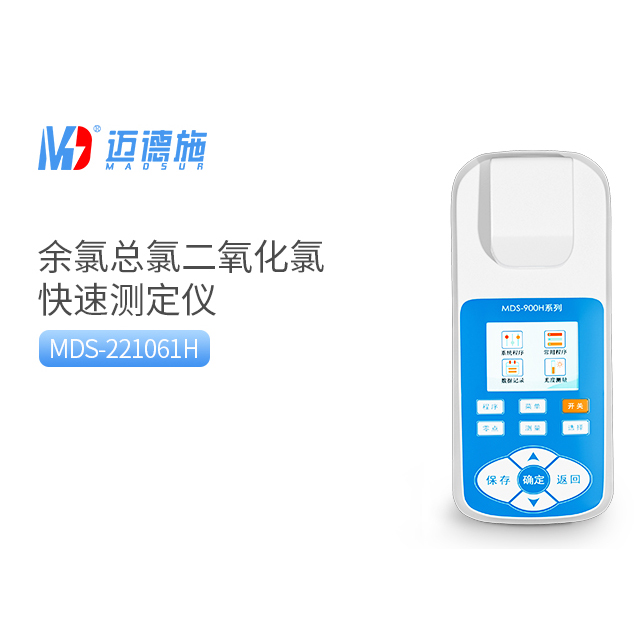
The portable residual chlorine water quality monitor has become a “palm-sized wonder” for bottled water production, achieving slimmer design and higher efficiency thanks to three key technological breakthroughs. These overcome the drawbacks of bulky traditional equipment, meet the cleanliness requirements of bottled water workshops, and fit production scenarios perfectly without technical errors.
1. High-precision Mini Residual Chlorine Sensor
Smaller Size, Uncompromised Accuracy
This is the core of equipment miniaturization and the guarantee of monitoring precision, fully compliant with industry standards.Traditional monitors were large mainly due to oversized detection components. The high-precision mini residual chlorine sensor greatly reduces size without any loss of accuracy — its performance matches large laboratory instruments.
It accurately captures residual chlorine in raw water, filtered water and finished bottled water, with errors controlled within industry standards. It strictly meets the requirements of Bottled Purified Drinking Water and Packaged Drinking Water standards.
Whether for preliminary screening of raw water or precise testing after filtration and disinfection, it provides reliable data, promptly identifies risks of over‑ or under‑dosing, and supports production process adjustment. It truly delivers “small body, high precision,” perfectly matching the strict standards of bottled water production.
2. Integrated Circuit Design
All-in-One Functionality for Easier Operation
Traditional devices were also bulky due to scattered functions requiring separate modules for detection, display, power and calibration. This complicated operation and occupied excessive bench space, unsuitable for dense, space-limited workshops.
The integrated circuit design combines residual chlorine testing, data display, automatic calibration and power supply on a single compact circuit board, greatly reducing parts and overall size for thorough miniaturization. The technical logic fully aligns with the development of portable testing instruments.
No auxiliary equipment is needed — one compact tester completes all measurements. Operation is greatly simplified: ready to test upon startup, with one-key calibration and no complex steps. It fully satisfies the bottled water industry’s demand for efficient, convenient and space-saving monitoring.
3. Lightweight Dustproof Material
Adapted to Clean Environments, Portable and Easy to Store
Bottled water workshops have extremely high cleanliness requirements to avoid dust and impurities contaminating water and equipment. Traditional materials easily trap dust and are hard to clean, failing to meet workshop standards.
The portable tester uses lightweight, dustproof engineering material, weighing less than 300g — light enough to hold in the palm or fit in a work pocket.Its sealed, dustproof structure effectively blocks particles, with a smooth surface that is easy to clean with a simple wipe, fully complying with workshop hygiene rules.
Its compact size allows flexible placement on sampling or operating tables without dedicated space. It avoids dust contamination and supports high-frequency on-site use, with material selection perfectly matched to real workshop conditions.
Exclusive Benefits:
Tailored for Bottled Water Production — Precise, Efficient and Worry-free
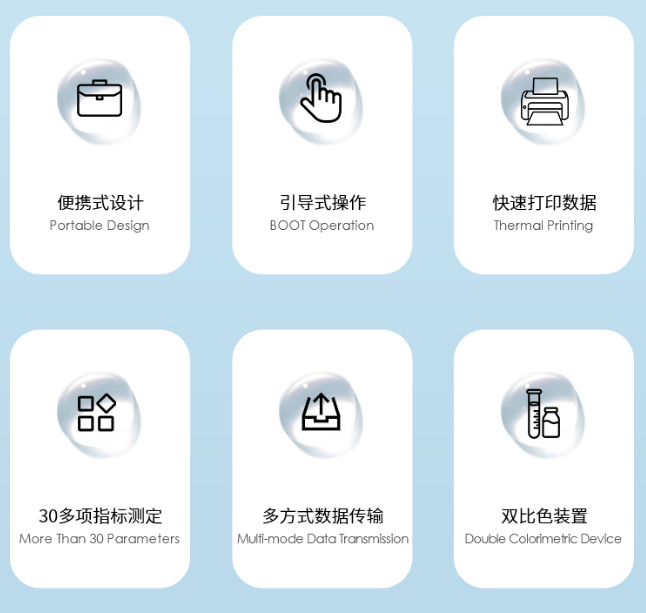
Targeting the core pain points of bottled water workshops — high cleanliness, narrow passages, dense equipment and frequent monitoring — this “palm-sized wonder” delivers three tangible benefits, completely solving the drawbacks of traditional devices. All descriptions reflect real production scenarios, making inspection much easier and strengthening quality safety.
1. Compact and Flexible, No More Heavy Lifting
Narrow passages and dense equipment make moving and storing bulky traditional devices difficult and risky. This portable tester is small and agile, moving freely between raw water, filtration, filling and other stages without extra space or heavy lifting.Inspectors can simply hold it in hand between sampling points, greatly saving physical effort and eliminating equipment-handling troubles.
2. Instant Testing, Guarding Quality Bottom Line
On-site sampling and testing deliver results within seconds, with no need for laboratory transportation. Inspectors immediately grasp residual chlorine conditions across production stages and adjust disinfection parameters promptly.This avoids substandard production caused by abnormal chlorine levels, cuts rework costs, protects product quality and keeps production on schedule.
3. Simple Operation, Workshop-friendly and Worry-free
The device is extremely easy to use with no professional training required, reducing learning costs. Its dustproof body is simple to wipe clean and meets hygiene standards.Low-power design supports a full day of high-frequency, multi-point monitoring on a single charge with no frequent recharging. Inspectors can focus on testing itself rather than equipment maintenance or complicated operation, significantly improving work efficiency and truly realizing “time and labor savings through technology.”
Trend Summary:
Technology Empowers the Palm-sized Wonder to Strengthen Bottled Water Quality

The continuing miniaturization of portable residual chlorine water quality monitors is no accident — it is an inevitable result of rising monitoring demands and technological progress in bottled water production, and a vivid example of technology empowering frontline work, with zero deviation in industry trend judgment.
Bottled water production prioritizes quality and efficiency. Bulky traditional monitors restrict inspection efficiency, fail to adapt to clean, narrow workshop environments, and can no longer meet modern production requirements.
Technology has shed the heavy shell of testing equipment, freeing inspectors from tedious handling and transportation, enabling more convenient, efficient and relaxed residual chlorine monitoring.
This “palm-sized wonder” is compact yet responsible for critical quality control. It reflects the industry-wide trend toward smaller portable water quality detectors, and builds a solid monitoring barrier for bottled water safety.
Feel free to leave a message with Medshy, a professional manufacturer of residual chlorine automatic sensors. Let every bottle of bottled water stand up to inspection, and make frontline inspection work more efficient and worry-free.
Previous: Teachers and Students Worried About Drinking Water Safety? Is the Online Automatic Residual Chlorine Analyzer “Misbehaving”? Manufacturer Suggests Avoiding These 3 Maintenance Mistakes!
Next: The "Disinfection Monitoring Master" for Tap Water Supply! Portable Automatic Residual Chlorine Tester: Small but Efficient and Accurate!

 TEL
TEL